

Sabbir
ADMIN
Sep 21, 2026
In today’s digital world, having a website is only the first step toward building a successful online presence. The bigger challenge is making sure potential customers can actually find your website when they search for products, services, or information related to your business.
This is where Search Engine Optimization (SEO) comes in.
SEO is the process of improving a website’s visibility in search engine results so that it can attract more relevant visitors, generate leads, and support long-term business growth.
What Is Search Engine Optimization?
Search Engine Optimization (SEO) is a collection of strategies and techniques designed to help websites rank higher in search engine results pages (SERPs).
Search engines such as Google analyze many factors when determining which pages to display for a search query. SEO helps businesses optimize their websites so search engines can better understand their content and users can find useful information more easily.
A successful SEO strategy focuses on both search engines and people—creating content that is relevant, useful, accessible, and technically sound.
Why Is SEO Important for Businesses?
Customers increasingly use search engines to discover businesses, compare solutions, research products, and make purchasing decisions.
A strong SEO strategy can help businesses:
Increase organic website traffic
Improve online visibility
Reach potential customers actively searching for relevant solutions
Generate qualified leads
Build brand awareness
Improve website usability
Support long-term digital growth
Reduce dependence on paid advertising for every website visit
Unlike short-term promotional campaigns, SEO can continue delivering value when a website consistently maintains useful content and strong technical foundations.
Key Components of SEO
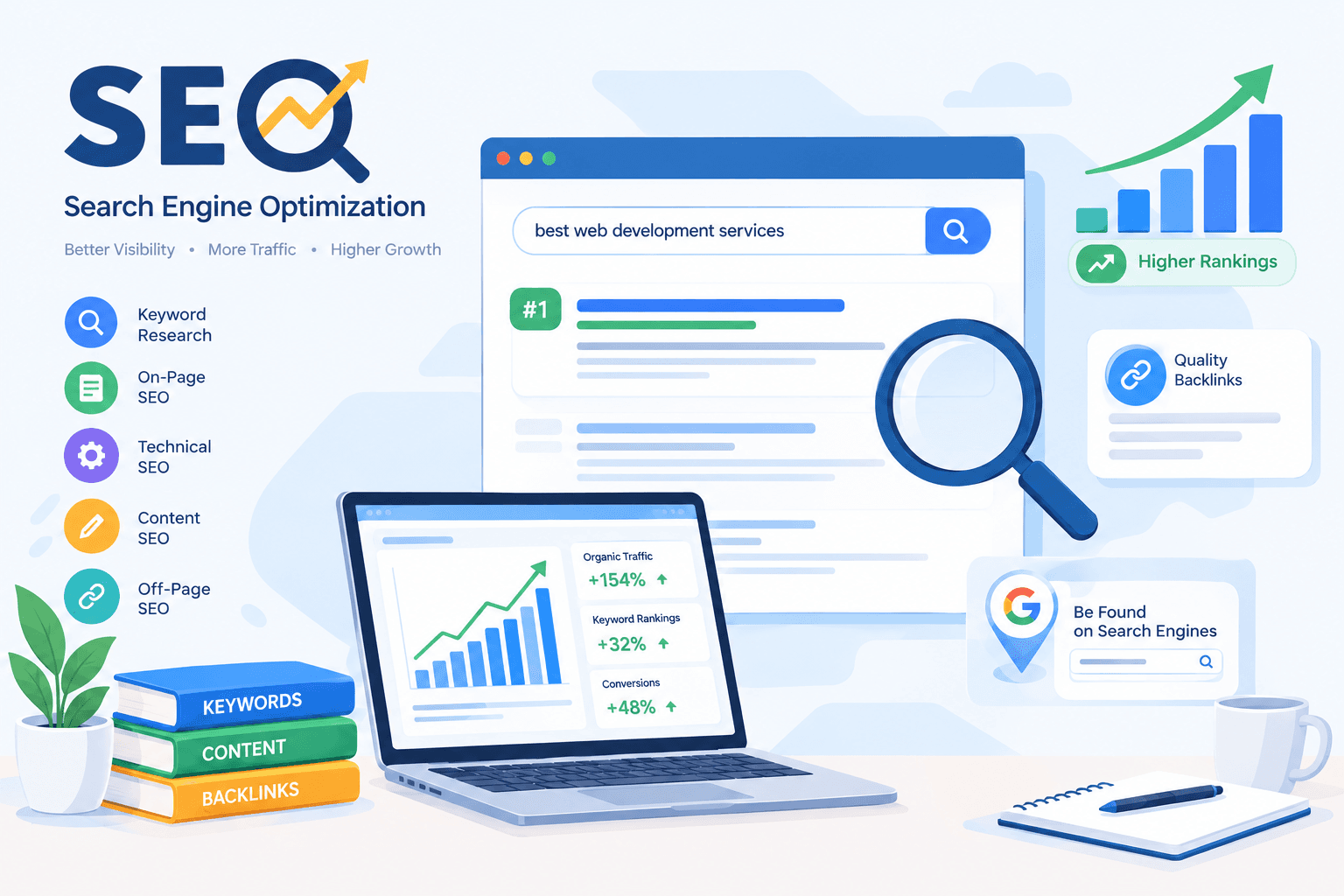
SEO involves several interconnected areas. A complete strategy generally includes the following:
1. Keyword Research
Keyword research identifies the words and phrases people use when searching online.
For example, a web development company might target searches such as:
Web development services
Custom software development
Mobile app development
E-commerce development
IT consulting services
Effective keyword research considers search intent, relevance, competition, and the needs of the target audience.
2. On-Page SEO
On-page SEO focuses on optimizing individual web pages.
Important elements include:
Page titles
Meta descriptions
Headings
URL structure
Keyword usage
Internal links
Image optimization
High-quality content
Clear content structure
The goal is to make each page easy for both users and search engines to understand.
3. Technical SEO
Technical SEO focuses on the technical foundation of a website.
Common areas include:
Website loading speed
Mobile responsiveness
Crawlability
Website architecture
Indexing
HTTPS security
XML sitemaps
Structured data
Broken links and technical errors
A technically healthy website makes it easier for search engines to discover, crawl, and understand its pages.
4. Content SEO
Content is one of the most important parts of a successful SEO strategy.
Businesses can create valuable content through:
Blog articles
Guides
Tutorials
Case studies
FAQs
Service pages
Product descriptions
Industry insights
High-quality content should answer real questions, solve problems, and provide useful information rather than simply repeating keywords.
5. Off-Page SEO
Off-page SEO involves activities that help build a website’s authority and reputation outside the website itself.
One important area is earning relevant, trustworthy backlinks from other websites.
Other activities can include digital PR, industry mentions, partnerships, and creating content that naturally attracts references from other websites.
The Importance of Search Intent
Modern SEO is not simply about placing keywords on a page.
Search intent refers to the reason behind a user's search.
For example:
Informational:
“What is SEO?”
Commercial:
“Best SEO services for small businesses”
Transactional:
“Hire an SEO agency”
Understanding search intent helps businesses create content that matches what users are actually looking for.
SEO and User Experience
Good SEO and good user experience often work together.
A website should be:
Fast
Mobile-friendly
Easy to navigate
Secure
Easy to read
Accessible
Organized with clear calls to action
If visitors struggle to find information or use a website, strong search visibility alone may not produce meaningful business results.
Common SEO Mistakes to Avoid
Businesses sometimes make SEO harder by using outdated or low-quality practices.
Common mistakes include:
Keyword stuffing
Publishing duplicate content
Creating content solely for search engines
Ignoring technical SEO problems
Using misleading page titles
Buying low-quality backlinks
Neglecting mobile users
Publishing large amounts of low-value content
Expecting immediate results
SEO is generally a long-term process that requires continuous improvement, monitoring, and adaptation.
How to Build an Effective SEO Strategy
A practical SEO strategy can follow these steps:
1. Understand your audience
Identify your target customers, their needs, problems, and search behavior.
2. Research relevant keywords
Find search terms that are relevant to your products, services, and audience.
3. Audit your website
Identify technical, content, usability, and performance issues.
4. Optimize existing pages
Improve titles, headings, content, internal links, images, and other on-page elements.
5. Create valuable content
Publish helpful content that answers meaningful questions and addresses customer needs.
6. Improve technical performance
Work on website speed, mobile usability, crawlability, indexing, security, and site structure.
7. Build authority naturally
Create useful resources and relationships that can earn relevant mentions and links.
8. Measure and improve
Monitor organic traffic, rankings, conversions, indexed pages, and other meaningful performance indicators.
Measuring SEO Success
SEO performance should be measured using business-relevant metrics rather than rankings alone.
Useful metrics can include:
Organic traffic
Search impressions
Click-through rate
Keyword visibility
Conversion rate
Leads generated
Sales or inquiries
Indexed pages
Engagement and user behavior
The right metrics depend on the goals of the business and the type of website.
Final Thoughts
Search Engine Optimization is an essential part of a modern digital strategy. It helps businesses improve their visibility, connect with people searching for relevant solutions, and build a stronger online presence.
However, successful SEO is not about chasing algorithms or using shortcuts. It is about creating a technically strong website, publishing genuinely useful content, understanding search intent, and continuously improving the experience for your audience.
With a consistent and well-planned SEO strategy, businesses can create a sustainable foundation for online growth.
Ready to improve your online visibility? Start by auditing your website, understanding what your customers are searching for, and building content that genuinely helps them.